
Water in the basement, or none at the tap in Dayton?
Dayton, Kettering, Oakwood and the Miami Valley
One call puts you through to an independent plumber who works the Dayton area. Talk about the problem and the price first. Book only if it suits you.
We're a referral line, not a plumbing company. The plumber you reach sets their own prices.
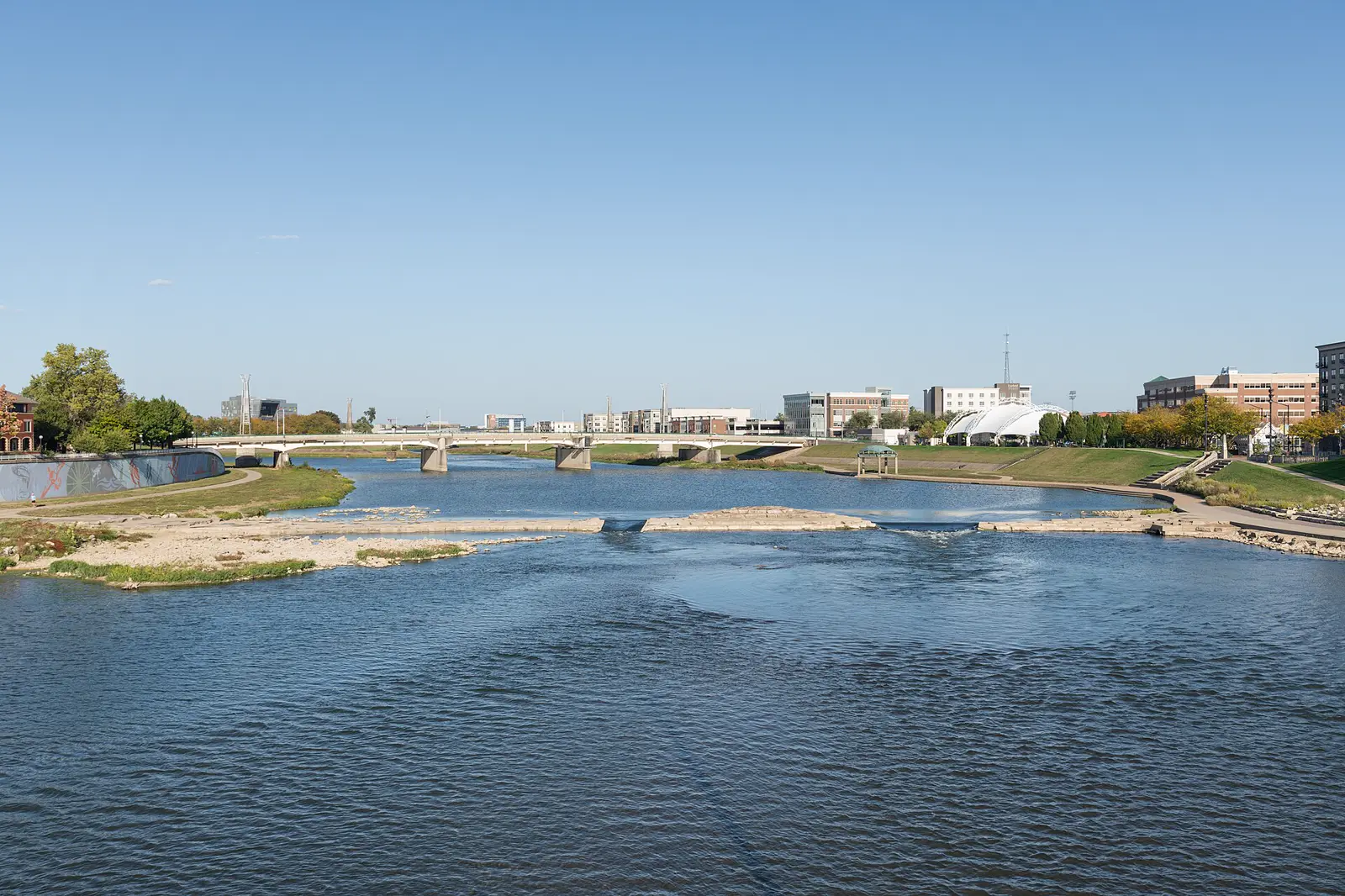

Where the city's pipe ends and yours begins
Before you pay anyone, find out whose problem it is. In Dayton the line is drawn at your property line, and the city's own program says so in plain words.
The city's side: main to the property line
Dayton Water maintains the public section of the pipe, from the main to the property line (Dayton service line program). If the whole street is dry or you see water pouring out of the ground near the curb, that's theirs.
937-333-4900
The city's 24-hour water dispatch (Dayton Water emergencies). The city says it repairs about 100 water main breaks and 240 service leaks a year (Water Distribution).
Your side: property line into the house
The homeowner is responsible for the private section, from the property line into the home (same program). A leak under the yard on that stretch, or anything inside the walls, is where a plumber comes in.
Call (937) 907-1532Curious what your pipe is made of? The city runs a "Know Your Pipes" survey and a service line map (servicelinecompliance.com).
Five minutes before the plumber answers
Stop the damage first. Most of this is a minute each.
- Main valve
- Shut off the main where the water line comes into the house. It's often in a basement, a utility room or a crawl space. A round handle turns clockwise; a lever turns a quarter turn.
- Water heater
- If it's the one leaking, turn it off at its breaker (electric) or set the gas knob to pilot (gas).
- Electric
- Stay clear of wet outlets, cords and the panel. If water is reaching the panel, don't touch anything and tell the plumber when you call.
- Photos
- Take pictures of the water and the damage before you clean up. Your landlord or insurance company may want them.
- Landlord
- Renting? Tell your landlord now. About half of Dayton households rent (Census ACS 2024).
- Basement water
- Dayton Water suggests running gutters and downspouts about 10 feet away from the house so rain doesn't run toward the foundation (Household Tips).
What Dayton callers say, and what it usually is
The way people describe it on the phone, with a plain guess at the job. Yours isn't here? Call anyway and ask.
Water in my basement
"It came up through the floor drain."A backed-up main line, a failed sump pump or a leak. Say when it started and whether it rained. Sump pump and sewer prices.
It won't drain, it won't flush
"Every drain in the house is slow."One slow sink is usually a clog you can reach. Every drain at once points to the main line, and old sewer pipe is where roots and breaks show up.
The hot water is gone
"Cold shower again."Dayton's city page notes that minerals in water settle out when it's heated (Water Quality), so scale in a tank is a real thing here. A plumber can check the heater before you replace it.
A drip, or a bill that jumped
"I can't find where it's going."Dayton Water says even a small drip from a worn washer can waste 20 or more gallons a day, and suggests a few drops of food coloring in the toilet tank: if color reaches the bowl without flushing, it leaks (Household Tips).
Brown water, weak pressure
"The house is from the forties."InterNACHI says galvanized pipe has a useful life of roughly 20 to 30 years and that corrosion inside is hard to see (InterNACHI). More than one in three Dayton homes went up in 1939 or earlier (Census ACS 2024).
It froze, or it split
"No water since the cold snap."January lows in Dayton average 23°F (Weather Spark). What to do about a frozen pipe.
What the bill tends to look like
National ranges from HomeAdvisor's cost guides, not Dayton quotes. Your price depends on the job, the house and the plumber. Ask for the price before work starts.
Ask for a price: (937) 907-1532- Trip fee
- $50 to $300
- Service call fees run $100 to $250 and often cover the first hour. HomeAdvisor, June 2026
- Thaw a frozen pipe
- about $100
- Often a flat fee. A burst pipe repair is $200 to $3,000, average about $500. HomeAdvisor, June 2026
- Main sewer line clog
- $187 to $569
- Average about $376; a camera look is $200 to $1,300 or more. HomeAdvisor, June 2026
- Water softener installed
- avg $1,500
- Most people pay $200 to $6,000; a single-tank unit is $500 to $1,700. HomeAdvisor, June 2026
- Nights, weekends, holidays
- 1.5x to 3x
- Most charge time and a half to triple their hourly rate off-hours. HomeAdvisor, June 2026
- Why an older Dayton house can cost more
- The median Dayton home was built in 1951, and about two in three were built before 1960 (Census ACS 2024). Old pipe can turn a simple swap into a bigger repair once the plumber sees what's behind the wall.
Dayton's water, in plain terms
- Dayton's drinking water comes from the Great Miami Buried Valley Aquifer, a layer of saturated sand and gravel. The city says it serves 400,000 people from it and that the aquifer stores about 1.5 trillion gallons (City of Dayton).
- The city runs 3 well fields and 2 treatment plants (Water Supply & Treatment), and softens the well water with lime (Water Quality).
- Even after that, the city's page gives Dayton's 2010 average hardness as 155 mg/L, about 9 grains per gallon (Water Quality). Hot water heaters and kettles collect scale over the years. A plumber can tell you whether a softener is worth it for your house.
- Winter is real. Dayton's cold season runs from early December to early March (Weather Spark), and frozen pipes are the January call.
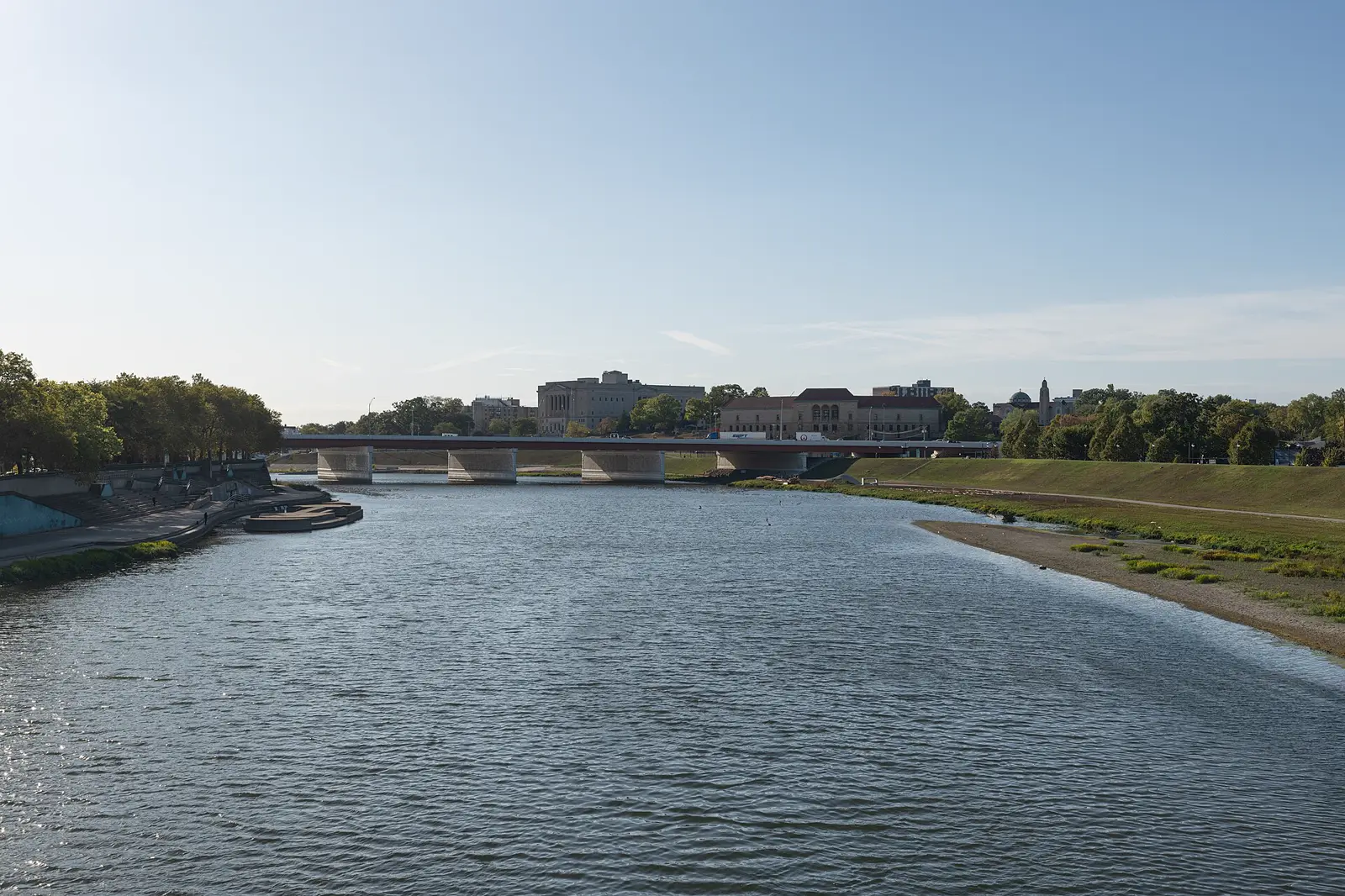

Brick streets and old pipes, Oregon to Dayton View
A house on a brick street downtown and a newer one out in the suburbs have very different plumbing. Tell the plumber how old your house is.
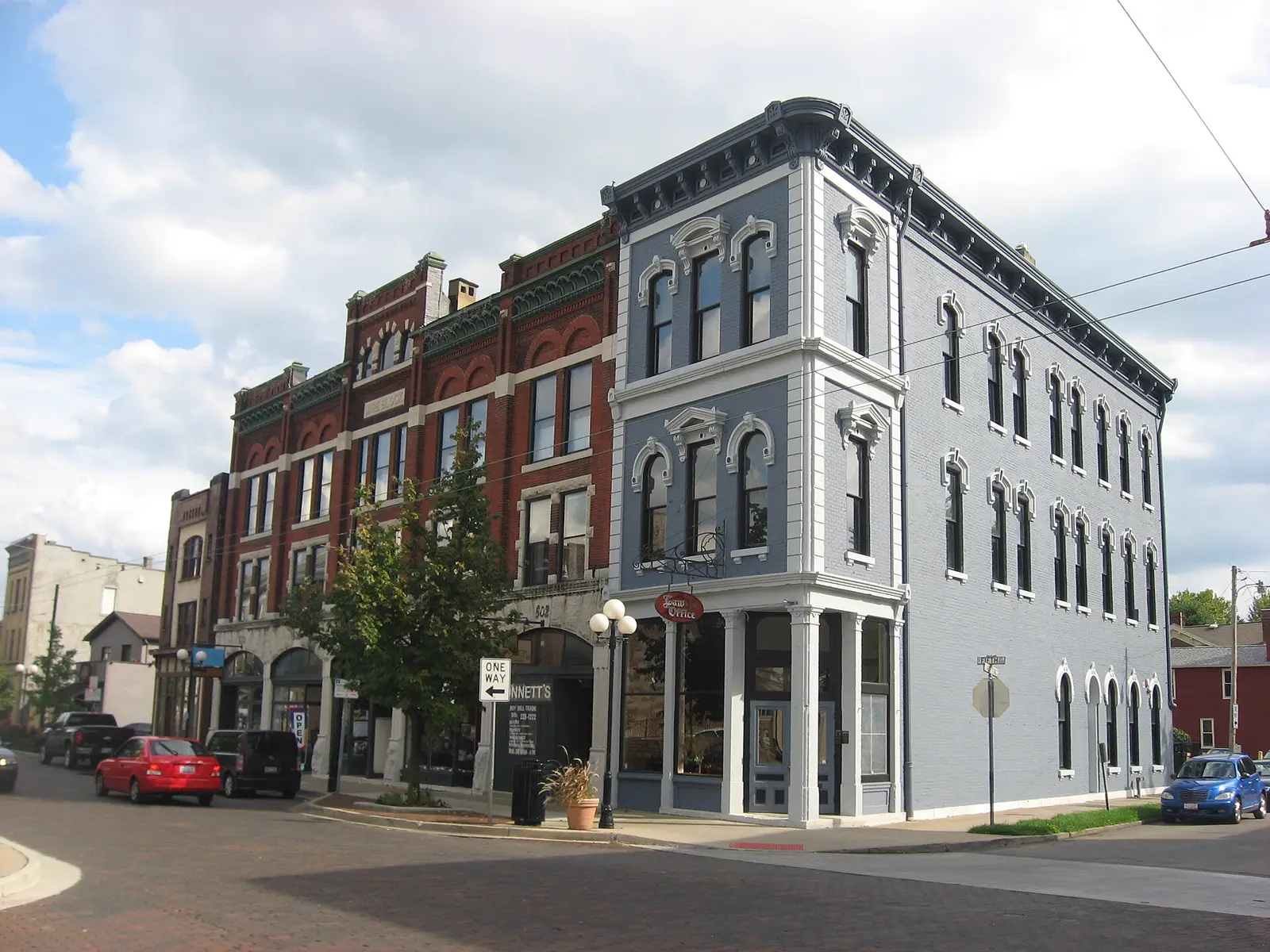
The Oregon District
Brick storefronts and houses next to downtown. A building this old can have pipe from several eras, so say when it went up.
Fifth and Jackson, Oregon Historic District, listed on the National Register of Historic Places. Photo: Nyttend, Wikimedia Commons, public domain.
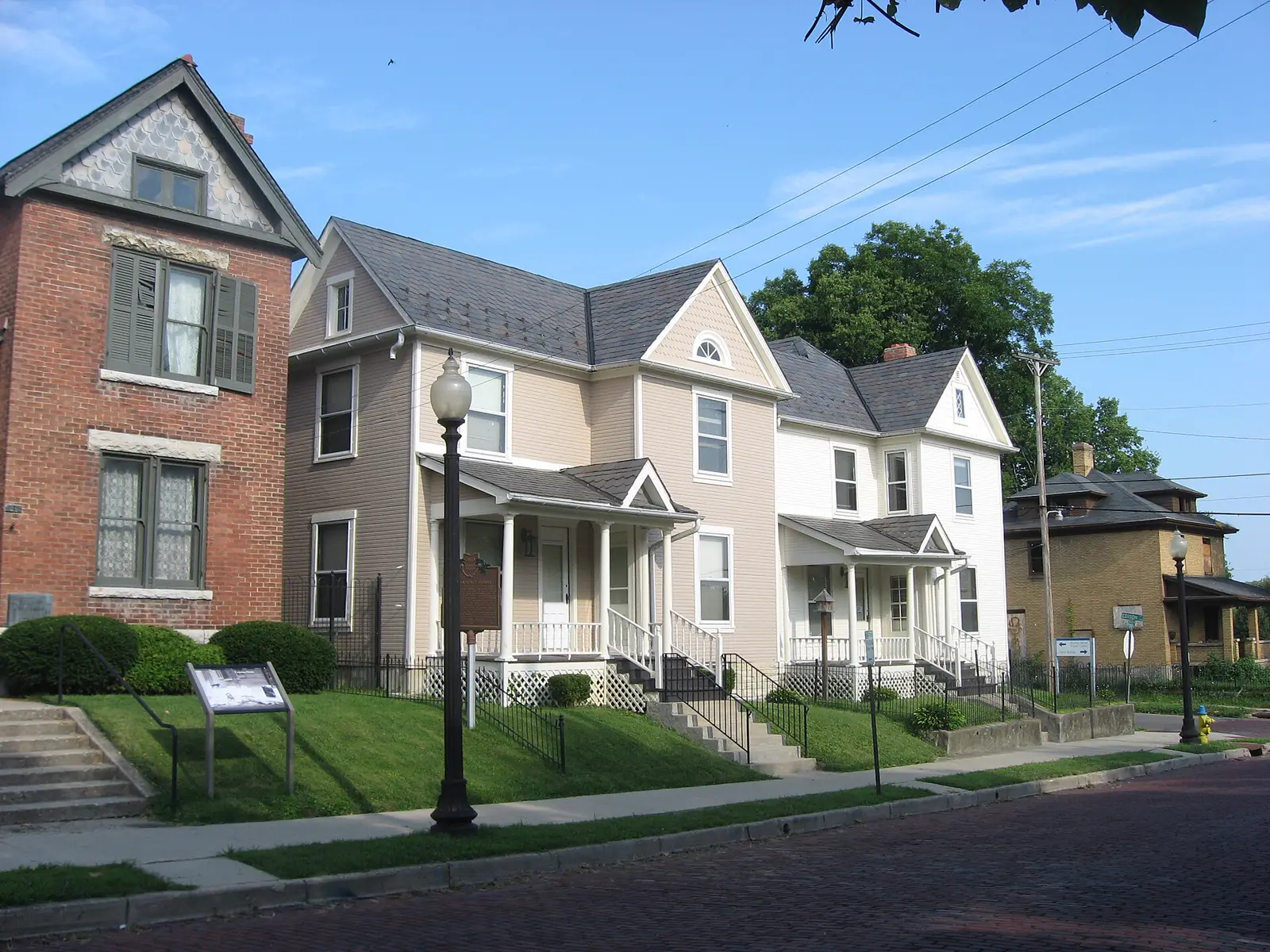
Wright-Dunbar
In western Dayton, on the block with the Dunbar house. Houses this old are where old drain and supply lines turn up.
200 block of N. Summit Street, Dunbar Historic District, with the Paul Laurence Dunbar House, a National Historic Landmark, at left. Photo: Nyttend, Wikimedia Commons, public domain.
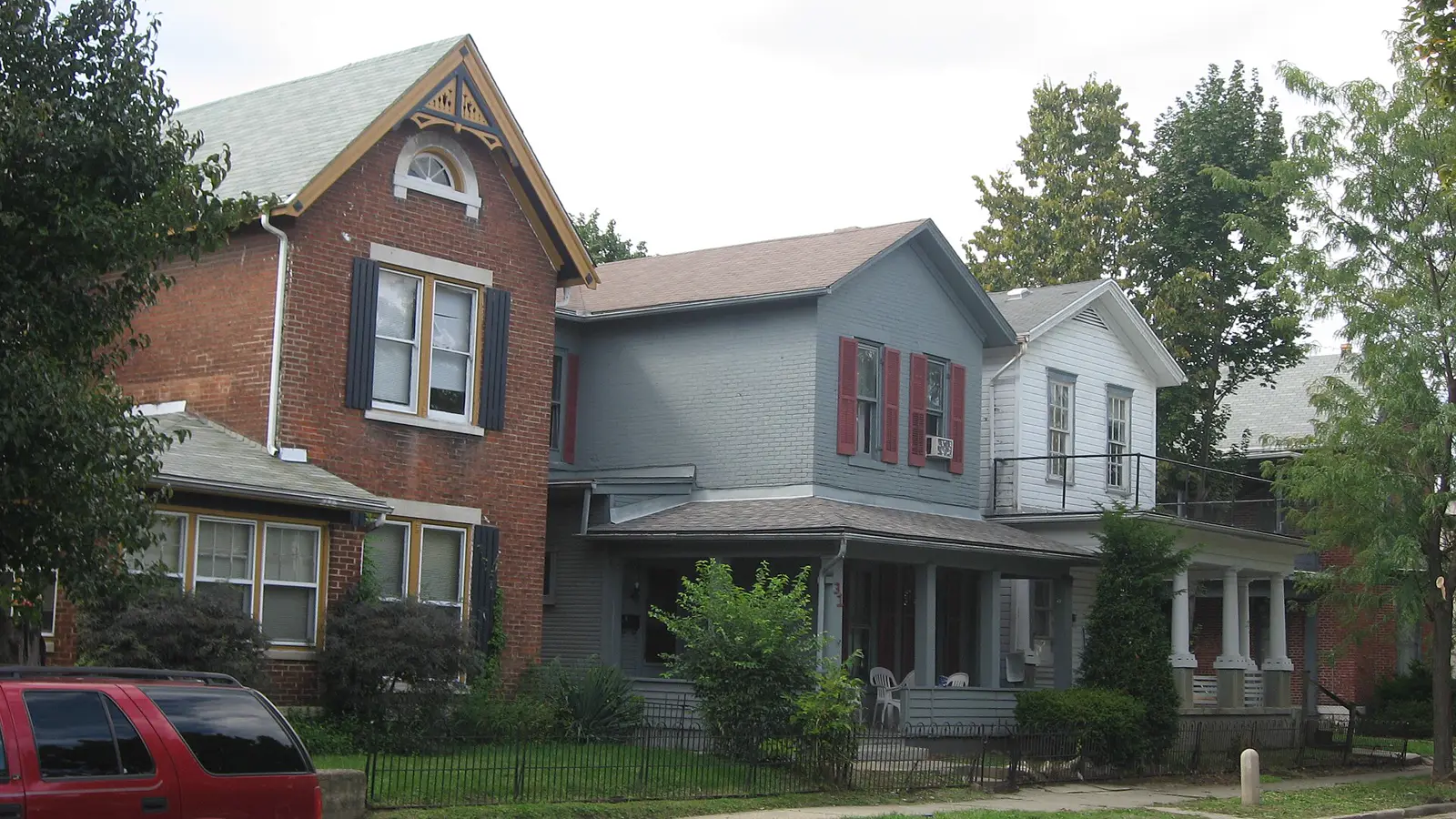
Huffman
Older houses set close together. Tell the plumber what's under yours, a basement or a crawl space, because tight access slows any pipe job.
First block of Huffman Avenue, Huffman Historic District. Photo: Nyttend, Wikimedia Commons, public domain.
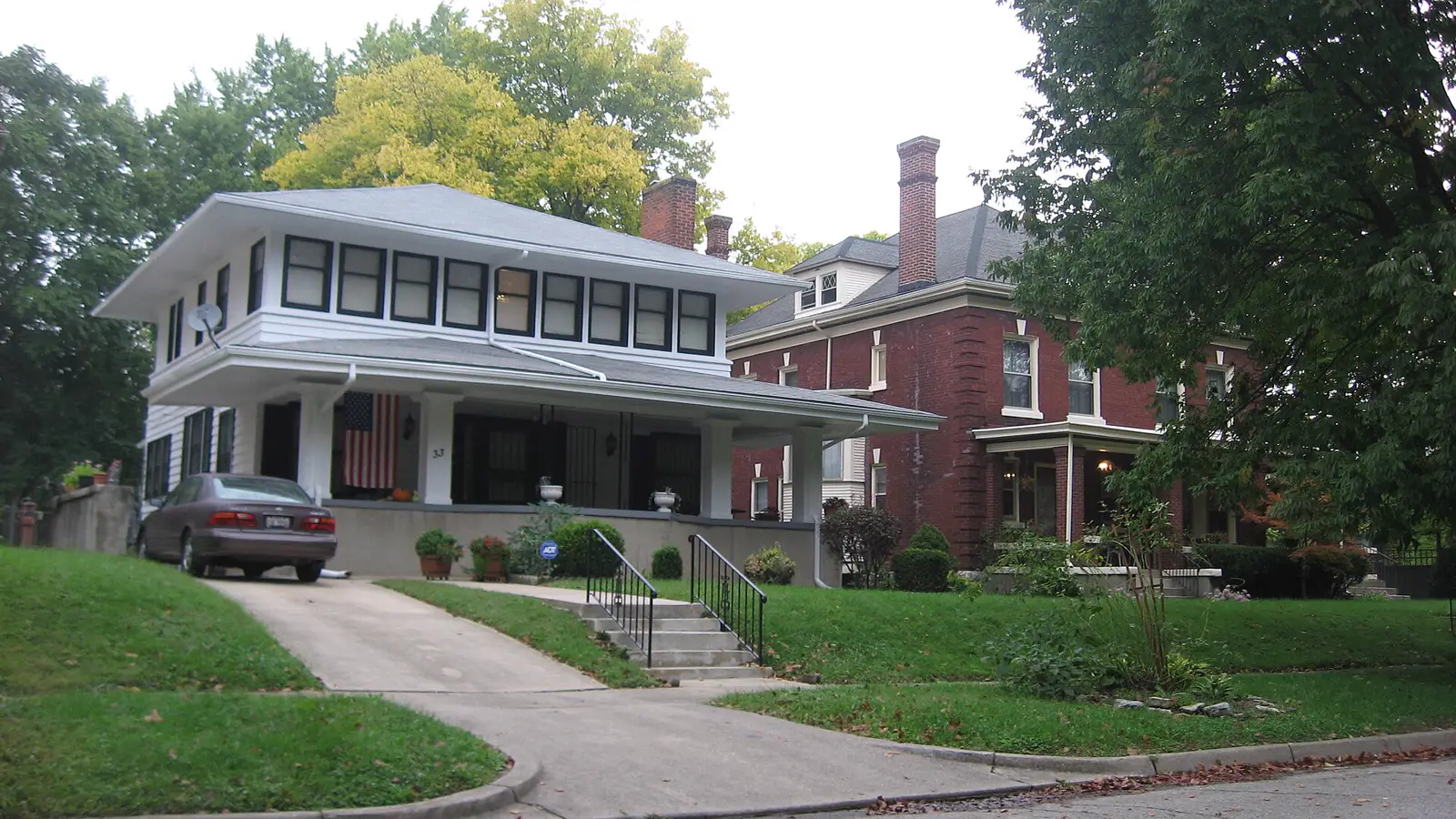
Dayton View
Big porches and a lot of house. Bigger houses mean longer pipe runs, so say how old the plumbing is.
First block of Yale Avenue, Dayton View Historic District. Photo: Nyttend, Wikimedia Commons, public domain.
Around Dayton: St. Anne's Hill, Grafton Hill, Belmont, Kenilworth, Webster Station, McPherson Town, South Park (Wikipedia lists several of these as historic neighborhoods).
Montgomery County cities: Kettering, Centerville, Oakwood, Miamisburg, Huber Heights, Vandalia, Trotwood, Englewood, Riverside, West Carrollton, Moraine and more (Wikipedia). Some homes outside the city are on a private well or septic, so say so when you call.
Who looks over a plumber's work here
Ohio doesn't ask for a state license from contractors who only do one- to three-family housework, according to Montgomery County. The checking is local, and it's worth two minutes.
- State
- Ohio's licensing board licenses commercial plumbing contractors. Montgomery County says state licensing is not required for contractors who only do one-, two- or three-family residential work (Montgomery County FAQ).
- City of Dayton
- The Building Inspection Division issues plumbing permits and runs the contractor registration program (Building Inspection). The city posts a list of registered plumbing contractors, last updated June 5, 2026 (Registered Contractors).
- Rest of the county
- Public Health, Dayton & Montgomery County registers plumbers and inspects plumbing everywhere in the county except Centerville, Dayton, Oakwood and Kettering (PHDMC plumbing).
- What to ask
- The company name, who they're registered with, and who pulls the permit. We can't vouch for any plumber, so check it yourself.
What people ask this line
Two longer pages, written for Dayton houses. Prices are ranges with their source, not quotes.
What plumbing runs in the Dayton areaFrozen pipe in a Dayton January?
Who exactly answers in Dayton?
An independent plumbing business that works your area. They aren't our employees and we don't do any plumbing. Ask for the company name on the call, and ask who they're registered with.
Do I pay anything to call?
No. There’s nothing to fill in. You only pay the company you hire, for work you agree to. Plumbing businesses pay a fee to receive calls, which is how this site is paid for. You only pay the plumber, and only for work you agree to.
Does Ohio license plumbers?
Not for houses, at the state level. Ohio's licensing board covers commercial plumbing contractors, and Montgomery County says state licensing is not required for contractors who only do one-, two- or three-family residential work (Montgomery County FAQ). For a house, the checking happens locally: the City of Dayton keeps a list of registered plumbing contractors, and Public Health, Dayton & Montgomery County registers plumbers outside Dayton, Centerville, Oakwood and Kettering. Ask the plumber where they're registered, then look them up. We never say a plumber is licensed.
Can a plumber get here tonight?
Often, but we can't promise it. It depends on who is on call and how busy they are. The plumber will tell you on the phone when they can get there and what after-hours fees apply.
My water is off. Is that the city or my pipes?
The City of Dayton maintains the public pipe from the main to your property line, and you're responsible for the private section from the property line into the house (Dayton service line program). If the neighbors are dry too, call Dayton Water's 24-hour dispatch at 937-333-4900 (city page). If it's only your house, call a plumber.
Does a Dayton plumbing job need a permit?
Usually, yes. Inside the City of Dayton, the city says permits are required for plumbing work on top of a building permit; ask the Building Inspection Division at 937-333-3883. Outside Dayton, Centerville, Oakwood and Kettering, Public Health requires permits for installing, altering or repairing a plumbing, drainage or water supply system, replacement fixtures included (937-225-4421). Those four cities handle plumbing on their own, so ask the city. A plumber normally pulls the permit.
I rent a home in Dayton. Who do I call first?
Start with your landlord. About half of Dayton households rent (28,585 of 59,778, Census ACS 2024). The city's FAQ says that on a rental property in Dayton, the plumbing work has to be done by a contractor registered with the city (City of Dayton), so ask your landlord which plumber they use.
Who we are and who foots the bill
Call a Dayton Plumber is a referral line. Your call goes to an independent local plumber. We don't do the work, we aren't a plumbing contractor, and we don't hold a plumbing license or registration.
Plumbing businesses pay a fee to receive calls, and that pays for this site. You only pay the plumber, and only for work you agree to.
The plumber you reach sets their own prices and answers for their own registration, insurance and work.
Checked October 2026.
Plumbing trouble in Dayton? One call.
Call (937) 907-1532